01 Category
Seat Belt Assemblies
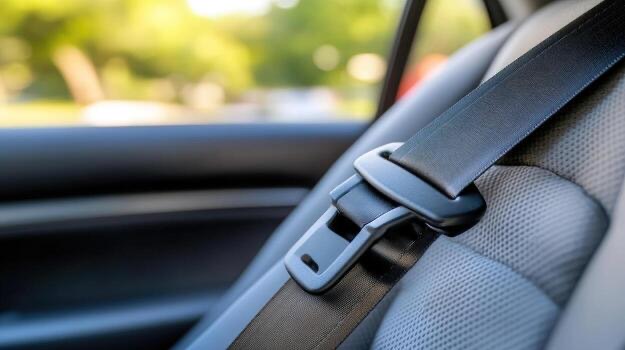
Complete three-point and two-point assemblies supplied as a matched set — webbing, retractor, latch plate, buckle and anchorage hardware, built and inspected as one unit rather than collected from separate sources.
Automotive Restraint Systems / 01
Precision-manufactured seat belt and automotive restraint solutions designed for dependable performance, consistent quality and demanding vehicle applications.
Repeatable dimensions on the parts that carry and transfer load.
Checks built into each stage rather than added at the end of the line.
Seat belts and restraint components are the focus, not a side line.
Belt length, webbing colour, hardware and fixings matched to the vehicle.
Built for buyers specifying by application, volume and schedule.
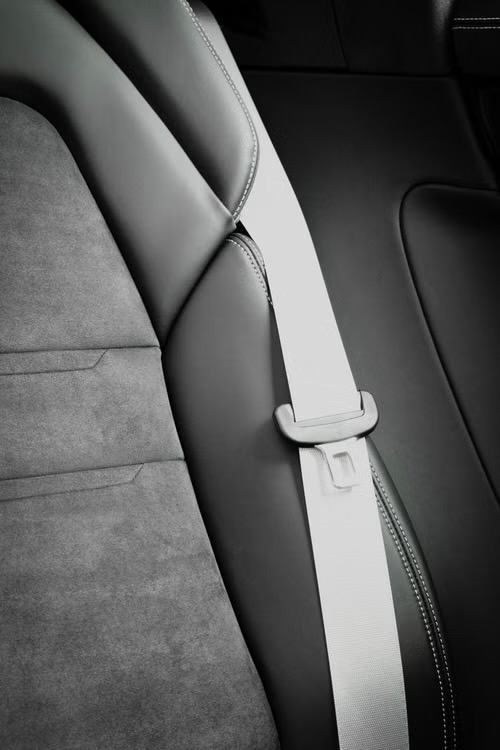
Fig. 01Shoulder belt, latch plate and pillar routing
Engineered Around Safety
A seat belt is the one safety system in a vehicle that works on every single journey, not just in an emergency. It has to be comfortable enough to be worn without a second thought, and predictable enough to manage load exactly as intended the moment a vehicle decelerates hard.
That combination is a manufacturing problem as much as a design one. A restraint assembly is only as dependable as the parts inside it — webbing woven to a consistent width and construction, a retractor that pays out smoothly and locks decisively, a buckle that latches with an unmistakable engagement and releases cleanly every time, and anchorage hardware that transfers load into the vehicle structure without deforming.
Each of those parts has to be made to the same specification thousands of times over. The difference between a dependable restraint product and an unreliable one is rarely a single dramatic failure — it is drift. Webbing that varies in thickness. A stitch pattern that wanders. Hardware seated a fraction out of position. Small inconsistencies accumulate until the assembly no longer behaves the way it was specified to behave.
Our approach is built around removing that drift. We treat the process as the product: define the requirement precisely, control what comes in, inspect at the points where a defect would otherwise travel downstream, and keep the assembly method identical from the first unit to the last. That discipline is what makes a restraint product usable on a real vehicle programme — where the belt supplied in month twelve has to be the same belt that was approved in month one.
Product Range / 02
Restraint products are supplied either as individual components for buyers who assemble in-house, or as complete belts ready to fit. Every category below is specified per application.
View Full Product Range
01 Category
Complete three-point and two-point assemblies supplied as a matched set — webbing, retractor, latch plate, buckle and anchorage hardware, built and inspected as one unit rather than collected from separate sources.
02 Category
The load-carrying member of the restraint. Woven construction spreads force across the pelvis and rib cage and stretches in a controlled way, so deceleration is managed over a longer distance instead of being taken in a single shock. Standard and high-visibility colours.
03 Category
Buckle bodies and press-release mechanisms. Engagement has to be unmistakable, and release has to stay clean and consistent across a very large number of cycles.
Explore Product04 Category
Webbing stored under light spring tension, paid out on demand and locked when payout has to stop.
Explore Product05 Category
Latch plates, D-rings, height adjusters, anchor plates and fixings that route and anchor a belt.
Explore Product06 Category
Belt length, webbing colour, retractor type, latch plate style, mounting geometry and fixing type configured around the seat and the mounting points actually available on the vehicle.
Discuss a RequirementEngineering / 03
A restraint assembly is a load path. Every part in that path has to behave the same way, every time, or the path changes — and a load path that changes is no longer the one that was specified.
Fig. 02 Three-point restraintIndicative arrangement only
Webbing, latch plate, buckle and anchorage form a continuous path from the occupant into the vehicle structure. Each junction has to hold under load without slipping, and each part has to be positioned where the design intended it to be.
Width, thickness and weave determine how webbing elongates. Variation in construction changes how much the belt stretches, which changes how deceleration is spread over time.
A latch has to give the occupant a clear, unambiguous signal that it is engaged. Dimensional tolerance on the latch plate and inside the buckle body is what keeps that signal consistent across cycles.
Spring force and spool geometry decide whether webbing sits close to the body or hangs slack. Too little tension and the belt is worn loose; too much and it becomes uncomfortable enough that people stop using it properly.
Parts that each pass inspection on their own can still fail as a set. Webbing thickness has to suit the latch plate slot; the latch plate has to suit the buckle throat; bolt patterns have to suit the vehicle's mounting points.
When a question is raised about a batch, the useful answer comes from records — which material went in, which checks were carried out, and what the result was. That only works if inspection is designed into the flow rather than bolted on afterwards.
Manufacturing / 04
The same seven stages apply whether we are supplying a single component or a finished belt. Nothing moves to the next stage until the previous one has been signed off.
See the Full Process01
Webbing and hardware chosen against the requirement for the seating position and application.
02
Parts checked, sorted and staged so the assembly stage starts from a known-good set.
03
Cutting to length and edge finishing, so webbing ends stay sealed and do not fray in service.
04
Webbing routed through hardware and secured, following one fixed method for every unit.
05
Dimensional and visual checks at the points where a fault would otherwise pass downstream.
06
Latching, release and retraction confirmed by operation, on the assembly as it will be supplied.
07
Identified, counted and packed so quantities and part references arrive as ordered.
Applications / 05
A belt for a family car and a belt for a bus that carries hundreds of passengers a day face very different demands. Duty cycle, mounting geometry and the regulation the vehicle is built to all change what the right assembly looks like.
01
Front and rear three-point assemblies with retractors, plus centre positions where a lap belt or a three-point layout is used depending on the seat.
02
Cabs where belts are fastened and released many times a day, and where mounting points sit on a heavier structure than a passenger car.
03
High-frequency use across many seats, where durability of the buckle and the retraction mechanism matters as much as initial fit.
04
Pickups, vans and light utility bodies where seats are often bench or fold-away and mounting geometry varies between builds.
05
Restored, modified and low-volume builds, including classic layouts where a two-point lap assembly is the correct fit for the seat and mounting points.
06
Operator seating on plant and equipment, where the restraint has to suit a fixed seat frame rather than a vehicle body.
Quality & Safety / 06
Inspecting a finished belt tells you whether that belt is acceptable. It does not tell you whether the next thousand will be. So the checks sit inside the process, at the points where a fault would otherwise travel forward unnoticed.
Webbing and hardware checked on arrival, before anything is committed to an assembly.
Lengths and positions verified against the specification for that part reference.
Latching, release and retraction confirmed by operating the assembly.
Documentation kept against a batch, so a question can be answered with evidence.
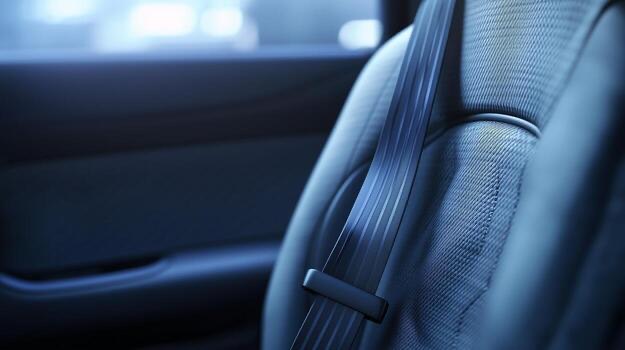
Fig. 03Webbing, stopper button and seat routing
We do not publish certification numbers or approval claims on this website. Applicable standards, test requirements and documentation are confirmed in writing against the specific product and market for each enquiry.
Enquiries / 07
Tell us about your vehicle, application, quantity and product requirements. Our team can help you identify the appropriate manufacturing approach.