01
Product focus
Restraint products are the whole business, so a technical question about webbing or buckle behaviour gets a technical answer rather than a referral.
About Us
Seat belts and restraint components are what we make. Not one line among many — the whole of it. That focus is the reason we can talk about webbing weave, buckle throat tolerance and anchorage geometry in the same conversation.
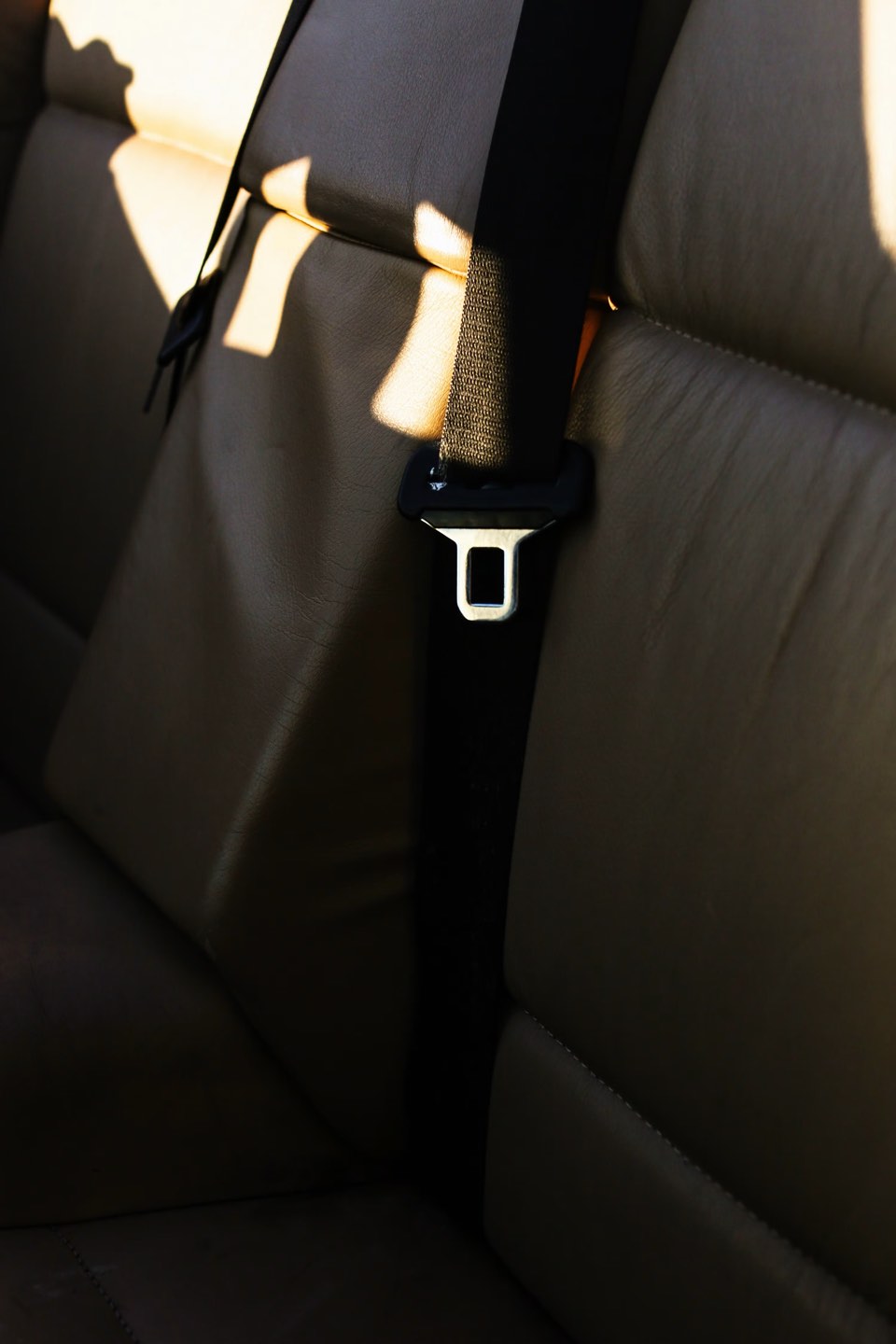
Approach / 01
We would rather be precise about what a product is than impressive about what it might be. Everything below describes how we work, not a list of claims.
Most restraint requirements arrive as a problem rather than a part number. A seat has particular mounting points. A vehicle is being built to a particular regulation. A buyer needs a belt that suits both, in a quantity that makes sense, on a date that has already been promised to someone else.
So the first thing we do is establish what the product actually has to be. Which seating position. Two-point or three-point. Retractor or fixed length. What the belt has to bolt to, and how much room there is to route it. What documentation the buyer needs alongside the parts.
Only once that is settled does manufacturing start — because a restraint assembly built to a half-understood requirement is scrap, however well it is made. Getting the specification right at the beginning costs a conversation. Getting it wrong costs a production run.
From there the work is deliberately unglamorous: control what comes in, hold one method for the whole run, check at the points where a fault would otherwise travel forward, and keep a record of what was done. Consistency is not exciting, but it is the entire product.
Safety / 02
A restraint product is unusual: for its whole service life it does almost nothing, and then it has to work perfectly on a few seconds' notice, without warning, without having been tested that morning.
A belt is fastened and released every time somebody gets in and out of a vehicle. Over a service life that is tens of thousands of cycles on the buckle alone — so wear behaviour matters as much as first-fit performance.
Nobody checks their seat belt before setting off. Whatever quality was built in at manufacture is the quality that will be there years later, which puts the responsibility firmly upstream.
A belt that has degraded should be obvious — frayed webbing, a buckle that feels wrong. The dangerous failure is the one that looks and feels normal, which is exactly what inconsistent manufacture produces.
Webbing, retractor, latch plate, buckle and anchorage only have meaning together. Supplying them as a matched, inspected set removes a whole category of mismatch that is hard to find later.
Comfort is a safety feature. A belt that sits badly gets worn badly, or routed behind the arm, or not worn at all — so retraction force and webbing feel are part of whether the restraint works at all.
Restraint systems are regulated in every major market. Which framework applies depends on the vehicle and where it is sold, so requirements are confirmed per project rather than assumed.
Philosophy / 03
Five principles that decide how a job is run. They are ordinary on purpose — the value is in applying them without exception.
01
Dimensions on load-bearing parts are held to the specification, not to what fits. A latch plate slot a fraction too wide will still accept webbing — and will let it move under load.
02
The first unit and the last unit of a run are built the same way. Where a method could be interpreted two ways, it gets written down until it can only be interpreted one way.
03
Stages are completed in order and signed off before the next one begins. Shortcuts under schedule pressure are precisely where restraint defects come from, so the sequence is fixed.
04
A repeat order should be indistinguishable from the original. If a component or method has to change, that is a conversation with the buyer, not a silent substitution.
05
The specification belongs to the buyer. Our job is to hold it exactly — including the parts of it that are inconvenient to hold.
Sequence / 04
Six steps between an enquiry and a delivered belt. The first two are where most of the risk gets removed.
01
Vehicle, seating position, belt format, quantity and timing established in writing.
02
The requirement turned into a defined part: lengths, hardware, fixings, documentation.
03
Webbing and hardware chosen and checked against that specification before commitment.
04
Assembly to one fixed method, in sequence, for the whole of the run.
05
Dimensional, visual and functional checks, with the result recorded against the batch.
06
Identified, counted, packed and dispatched against the agreed reference and quantity.
For Buyers / 05
Six things a buyer of restraint products usually wants to know before placing an order — answered plainly.
01
Restraint products are the whole business, so a technical question about webbing or buckle behaviour gets a technical answer rather than a referral.
02
Belt length, webbing colour, hardware and fixing type are configured to the seat and the mounting points that exist — not forced onto a fixed catalogue item.
03
One method per part, held for the whole run. Changes are raised and agreed rather than absorbed quietly into production.
04
Direct contact with people who know the job. If a date is going to move, you hear it from us before it becomes your problem.
05
Checks are positioned where they prevent downstream defects, and the result is recorded so a later question can be answered with evidence.
06
We ask about the vehicle before quoting, because a bus belt and a passenger-car belt are different products even when the part looks similar.
You will not find certification numbers, production volumes, customer names or years-in-business figures on this website. Where those details are relevant to a purchasing decision, they are shared directly and in writing against a specific enquiry — see Quality & Safety for how we handle standards and documentation.
Next Step
Send the vehicle, the seating position and roughly how many you need. That is enough for us to come back with something useful.