Manufacturing
Precision through every stage.
Seven stages between a requirement and a packed belt. The value is not in any one of them — it is in never skipping one.
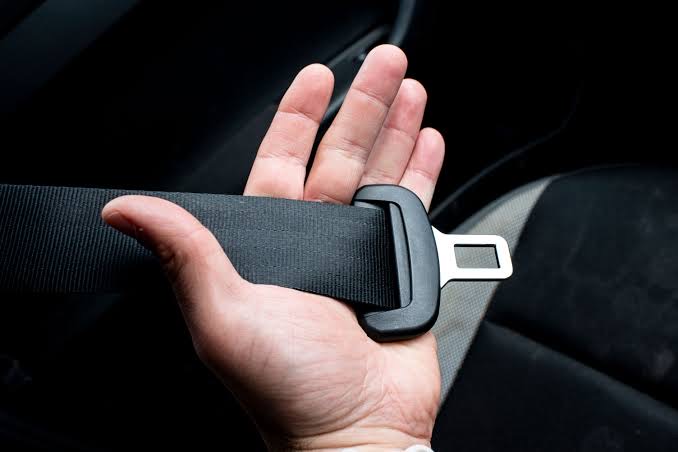
Fig. 01Webbing and latch plate presented for check
Overview / 01
The method is the product.
Two restraint assemblies can share a drawing and still be different products, because most of what determines how a belt behaves is decided by how it was built rather than what it was built from.
So the manufacturing sequence is fixed. Each stage has a defined input, a defined output and a check that confirms the second matches the first. Work does not advance until that check passes, which means a fault is found at the stage that caused it rather than at final inspection, where the cost of finding it has already multiplied.
The same discipline covers a single component and a complete belt. A latch plate supplied on its own still gets the incoming check, the dimensional check and the record; the difference is only how many of the seven stages apply.
- One documented method per part, held for the whole production run
- Stages completed in sequence, each signed off before the next begins
- Checks placed where they stop a fault travelling forward
- Records kept against the batch, not against the shift
Process / 02
The manufacturing sequence
What happens at each stage, and what has to be true before the work moves on.
01
Requirement Definition
Before anything is ordered or cut, the product is defined: which vehicle and seating position, two-point or three-point, retractor or fixed length, the anchorage points available, the fixings the vehicle uses, the quantity, and what documentation has to travel with the parts.
This is the cheapest stage to get right and by far the most expensive to get wrong. A belt built correctly to a misunderstood requirement is still scrap.
02
Material & Component Preparation
Webbing and hardware are checked on arrival against the specification for that part reference — before any of it is committed to a build. Incoming checks cover the things that would be invisible later: webbing width and construction, hardware dimensions and finish, and whether the parts in front of us are actually the parts that were ordered.
Approved material is then sorted and staged so that assembly starts from a known-good set rather than from whatever is nearest.
03
Webbing Processing
Webbing is cut to the length the specification calls for, and the cut ends are finished so they will not fray in service. An unfinished end looks acceptable on the day and unravels months later, which is exactly the kind of slow failure that restraint manufacture has to design out.
Cut lengths are verified rather than assumed, because belt length determines where the latch plate and buckle actually meet on the occupant.
04
Assembly
Webbing is routed through the hardware — latch plate, D-ring, anchor plate, buckle stalk — in the defined order and orientation, and secured. Orientation matters more than it looks: hardware fitted the right way round but the wrong way up changes how load reaches it.
One method is used for the whole run. Where a step could be interpreted two ways, it is written down until it can only be interpreted one way.
05
Inspection
Assembled units are checked against the specification: overall and sub-lengths, hardware position and orientation, and the condition of the webbing and the securing points. Visual inspection covers the things a measurement will not catch — a mark on the webbing, a burr on a plate, a part that is right but scuffed.
Anything that does not conform is held rather than passed on with a note.
06
Functional Verification
The assembly is then operated as a user would operate it. The latch plate is inserted to confirm the engagement is positive; the button is pressed to confirm release is clean; where a retractor is fitted, webbing is drawn out and allowed to return to confirm it pays out smoothly and retracts fully.
These are functional checks on the assembly as it will be supplied. Type-approval testing and destructive testing are separate activities, carried out to the requirements of the applicable regulation and agreed per project.
07
Packing & Dispatch
Finished units are identified against the part reference, counted, and packed so they arrive in the condition they left in — webbing protected from abrasion, hardware from knocks. Quantities and references are confirmed against the order before dispatch.
Records for the batch are completed at this point, so a question raised later can be answered from documentation rather than from memory.
At a Glance / 03
The sequence, end to end
Nothing advances until the previous stage is signed off.
01
Requirement
Product defined in writing.
02
Preparation
Incoming material checked and staged.
03
Webbing
Cut to length, ends finished.
04
Assembly
Routed and secured to one method.
05
Inspection
Dimensional, positional, visual.
06
Verification
Latch, release, retraction operated.
07
Dispatch
Identified, counted, packed, recorded.
Testing and approval
The checks described on this page are production checks carried out on the parts we supply. Regulatory type-approval testing is a distinct process governed by the standard the vehicle is homologated against, and is agreed per project — see Quality & Safety for how standards and documentation are handled.
Enquiries
Have a part that needs making to specification?
Send the drawing, the sample, or just a description of the seat and the mounting points. We will tell you what we need to define it properly.